
CALL FOR PAPERS
Abstract submission is now closed
Key Dates to Remember
| Thursday 17 April 2025 | Abstract submissions close |
| Monday 19 May 2025 | Notification of acceptance |
| Monday 9 June 2025 | Authors to confirm participation |
| Monday 11 August 2025 | Full paper due |
Overview
There is no better event than the EEA2025 Conference and Technology Exhibition to connect, collaborate and grow your knowledge around the future of our industry.
An electric future is critical to Aotearoa New Zealand achieving net-zero carbon emissions, putting our people front and centre on the road to decarbonisation.
It is an exciting time to be working in the industry.
But there are challenges to solve around how we deliver more sustainable, resilient infrastructure, and customer-centric energy solutions as the nation transitions, all the while ensuring a safe, reliable, and secure electricity supply.
New ideas, greater creativity and different perspectives are critical to achieving the integration of more clean, renewable fuels, smart infrastructure, and the design and integration of new technologies such as those to enable demand flexibility.
To enable change we need fresh thinking, innovation and collaboration. We also need to understand future trends and risks, and work more closely with customers bringing smart technologies to the sector.
To enable this transition we need to grow and share our collective knowledge.
EEA2025 is the place where it all happens. In 2024 we welcomed more than 1200 delegates, exhibitors and visitors over our three-day event.
The event brings together thought leaders, technical and engineering experts, influencers, and those in the field, from across the energy industry to focus on finding solutions. It is about invigorating and empowering our people to step up to the challenge of delivering Aotearoa’s decarbonised future.
EEA2025 also includes a comprehensive Technology Exhibition, a fantastic interactive opportunity for businesses from around the world and here at home, to showcase their technology, services, people, and products, and for delegates to get ‘hands-on’ with the future of the sector.
As the largest collaborative power industry forum in Aotearoa, this is also where connections are made and new partnerships are formed.
So join us in 2025 to continue the korero, build your understanding and support the mahi of our community to ensure we are ‘Electrifying Aotearoa: Today’s innovation, tomorrow’s system’.
We look forward to seeing you on 9-11 September 2025 in Christchurch!
Abstract/Paper Submission
Paper proposals are invited from all sectors and companies in the industry.
As a first step in the 'Call for Papers' we are inviting abstracts from industry stakeholders. Abstracts can include engineering and strategic analysis, research insights, case studies, and project results. Details of theme areas are provided below.
If you wish to submit an abstract for consideration for the Conference Programme, you must also intend to register for the Conference and Exhibition.
To access the Abstract Submission guidelines and terms and conditions, please CLICK HERE.
All abstracts are to be submitted electronically in accordance with the guidelines provided.
Call for Papers Checklist Before Submitting
Please make sure you have the following information ready before submitting your abstract:
- Contact details for the corresponding author (the person who will receive all communication regarding the submission)
- Presentation Title - should be no more than 20 words
- Theme - please decide which theme you would like to allocate to your submission. CLICK HERE to view the list of themes
- Abstract - no more than 400 words, images are not allowed
- Name and affiliation of all authors linked to the submission
- Biography of presenting author - biography word limit is 100 words
Paper Themes and Context
‘Electrifying Aotearoa: Today’s innovation, tomorrow’s system’.
Our nation’s electric future is one of decarbonisation, deregulation, digitalisation and decentralisation – all of which are critical to achieving net zero emissions by 2050.
The pace and scale of change required is unprecedented bringing a wealth of new opportunities and challenges to overcome.
Join us as we work to grow and share our collective knowledge by presenting at EEA2025!
We are seeking presentations from all you forward thinkers, industry experts, futurists, problem solvers and curious minds to help build our knowledge on the challenges and opportunities we face as we transition to a low carbon economy.
Presentation themes could include:
- Advancing Renewable Integration
- Overcoming technical challenges in grid integration.
- Scaling up distributed energy resources (DERs).
- Demand Flexibility and Consumer Empowerment
- Harnessing consumer behaviour for demand-side management.
- Optimizing smart energy devices for grid and consumer value.
- Resilience in the Face of Climate Events
- Improving network preparedness.
- Innovations in system hardening and restoration.
- Low Voltage Networks and Smart Grids
- Challenges of managing high-DER penetration.
- Digital twins for LV networks: Use cases and opportunities.
- Big Data and Digital Transformation
- Data-driven network planning and asset management.
- Unlocking value through AI and machine learning.
- Distributed System Operations (DSOs)
- Transitioning to a DSO model: Roles and responsibilities.
- Enabling flexible connections for generation and load.
- Electrification of Aotearoa Together
- Collaborations to accelerate electrification efforts.
- Engaging communities for an equitable transition.
- Asset Management and Infrastructure Planning
- Future-proofing assets for grid modernisation.
- Innovations in lifecycle cost management.
- Environmental and Social Sustainability
- Reducing environmental impact while increasing grid capacity.
- Enhancing social acceptance of energy infrastructure.
- Regulatory and Market Innovations
- Adapting market structures to enable flexible services.
- Regulatory reforms for DER and demand-side participation.
- Cybersecurity and Energy System Reliability
- Addressing cybersecurity threats in a digitised grid.
- Ensuring reliability amidst growing complexity.
- Connecting Generation and Load to the Grid
- Streamlining connection processes for renewable projects.
- Best practices in stakeholder collaboration and engagement.
- Innovation in the Electricity Industry
- Emerging technologies transforming the energy landscape.
- Case studies on successful innovation adoption.
- Public Safety and Grid Operations
- Strategies for managing risks to public safety.
- Balancing operational demands with safety standards.
- Future Workforce and Capability Building
- Preparing the workforce for a transforming energy sector.
- Diversity and inclusion as enablers of innovation.
- Collaboration for Sector-Wide Challenges
- Co-innovation for shared industry goals.
- Lessons from international partnerships and pilots.
- Energy Storage and Grid Reliability
- The evolving role of battery storage in system stability.
- Maximising value from utility-scale and behind-the-meter storage.
- Innovative storage solutions for firming renewables.
- The economics of storage: Stacking value streams and market participation.
- Extending the Life of Legacy Assets in the Energy Transition
- Strategies for repurposing aging infrastructure for modern grid needs.
- Managing aging transformers, substations, and lines in a decarbonized world.
- Condition monitoring, predictive maintenance, and life-extension techniques.
- Regulatory and financial considerations for asset refurbishment vs. replacement.
- Building the Industry Leaders of Tomorrow: Workforce, Skills, and Leadership
- Developing the next generation of engineers, technicians, and industry leaders.
- Addressing skills shortages in trades and engineering.
- Upskilling for the energy transition: New capabilities as the country fully electrifies.
- Leadership development: Building diverse, adaptive, and future-ready teams.
- Retaining talent and fostering innovation in a changing electricity sector.
- Electrifying Industry and Agriculture
- Overcoming barriers to industrial electrification and process heat transition.
- Opportunities for electrification in agriculture: irrigation, processing, and on-farm energy use.
- Integrating renewables, demand flexibility, and storage in industrial and agricultural settings.
- Policy, market, and technology enablers for large-scale electrification.
 Audience
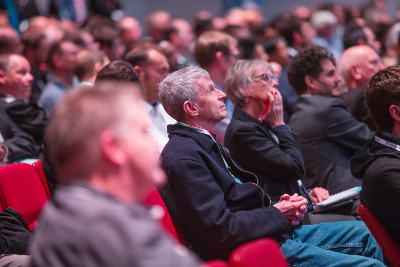
Previous events have been attended by industry CEOs and senior managers; engineering and asset management staff; technical, safety and business development managers; system analysts and planners; field staff and supervisors; engineering students and academics from NZ universities; Government officials; consultants and contracting staff; standards writers and other industry stakeholders.
 Why Submit?
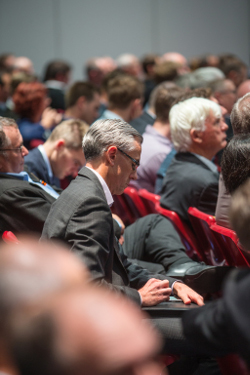
The writing and presentation of technical papers is an important part of every person's professional development and training. It provides the best opportunity to share your experience and innovative work among enthusiastic and knowledgeable industry engineers.
The EEA Conference gives the opportunity to profile and share information on new engineering knowledge, practices or technology; and a platform for a company or individual to get recognition as an engineering leader.
University and Polytech students are encouraged to submit paper proposals. The EEA has a strong commitment to the future development of our industry engineering students and integrating student learning with the Conference experience. Student papers keep industry informed on current research projects, whilst the Conference provides the opportunity for students to meet industry engineers and employers.
 Best Paper Awards
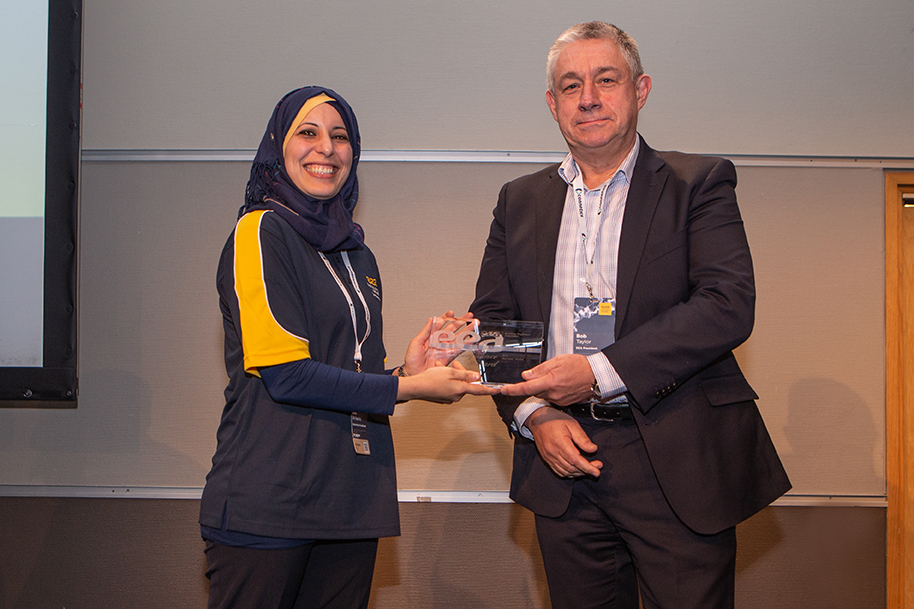
All papers submitted are eligible for the Best Paper Awards which are awarded to papers of outstanding quality. The Best Paper Awards categories include:
- EEA Member
- Best Paper Presentation (sponsored by the IET)
- Student
- Non-Member
For further information on these awards please CLICK HERE.